066/270: #Hammersmith (District & Piccadilly) – The Salvaged

Hammersmith, that is the District & Piccadilly Hammersmith, is one of those stations I’ve always seen as function over form. With its entrance sunk deep inside a nondescript 1990’s shopping centre called “Broadway,” overlooking it is easy. The same shopping centre forced the demolition of the original Harry Ford facade, something many will view as architectural vandalism.

But out of the ashes of what was clearly a Needs-Must rebuild stands something quite interesting. Effort in that ‘architectural vandalism’ has at least been made to salvage the remains of the original station, which now provides the frame to a spectacular mosaic artwork of Hammersmith Bridge.

A the plaque on wall reads,

The application of old and new elements are a reminder of the continuing commitment by London Underground to art and design.

Image copyright A Carter – CallingAllStations.co.uk

Station Index

065/270: #RavenscourtPark – The Victorian

To single out a station to represent the Victorian era is difficult, if not impossible, owing to the fact that such a vast part of the Underground network was constructed in that era. So how do you represent the quintessential Victorian station? Something well known, grand and imposing? Or maybe something a little more ordinary like the offering at Ravenscourt Park.

It opened in 1873, slap bang in the middle of the Victorian railway boom. It’s telling of the expansion, wealth and aspiration of the time. This would have merely been an unimportant suburban outpost but just look at the facilities it was given. It’s got neat triangular canopies spanning two island platforms, and offers commanding views over this area of affluent west London from on top of its viaduct. It’s topped off by a spacious and inviting ticket hall, strong in it’s brick and stone stature and symbolic of the age. Compare this with station construction in the modern age and with one of London’s newest suburban stations, Lea Bridge Road. This apologetic rebuild is just about lucky enough to receive a couple of small plexiglass shelters and certainly nothing as lavish as a ticket hall or street level building.

Image copyright A Carter – CallingAllStations.co.uk
Station Index

064/270: #StamfordBrook – The Blue Signs

In the last post at Turnham Green (063) we looked at oddities and how, in a way, each station presents its own uniqueness to the journey. But there are some very pleasing ‘uniformities’ to be noted (and enjoyed) about Underground Station designs as well.

We all recognise the roundel as the calling card of the network, but I think the station name plates themselves are just as recognisable. These present the name of the station in bold white capital letters on a blue background. They are more often than not found on the front of protruding canopies at the entrances to ticket halls. Even Leslie Green stations were at some point retro fitted with variations of white lettering on a blue background and this piece of design can be found at nearly every station. (With the only exception so far being Terminal 5 (025)).

Sometimes in the absence of entrance canopies, designers of these blue signs have got creative. Check out the vertical examples which sit fitted to the gateposts flanking the secondary entrance of Stamford Brook. Granted I’m going to continue to be awkward and post the picture in black and white, but trust me, you instantly know what this curious passageway is all about just by the colour of that sign…

Image copyright A Carter – CallingAllStations.co.uk
Station Index

063/270: #TurnhamGreen – The Meta

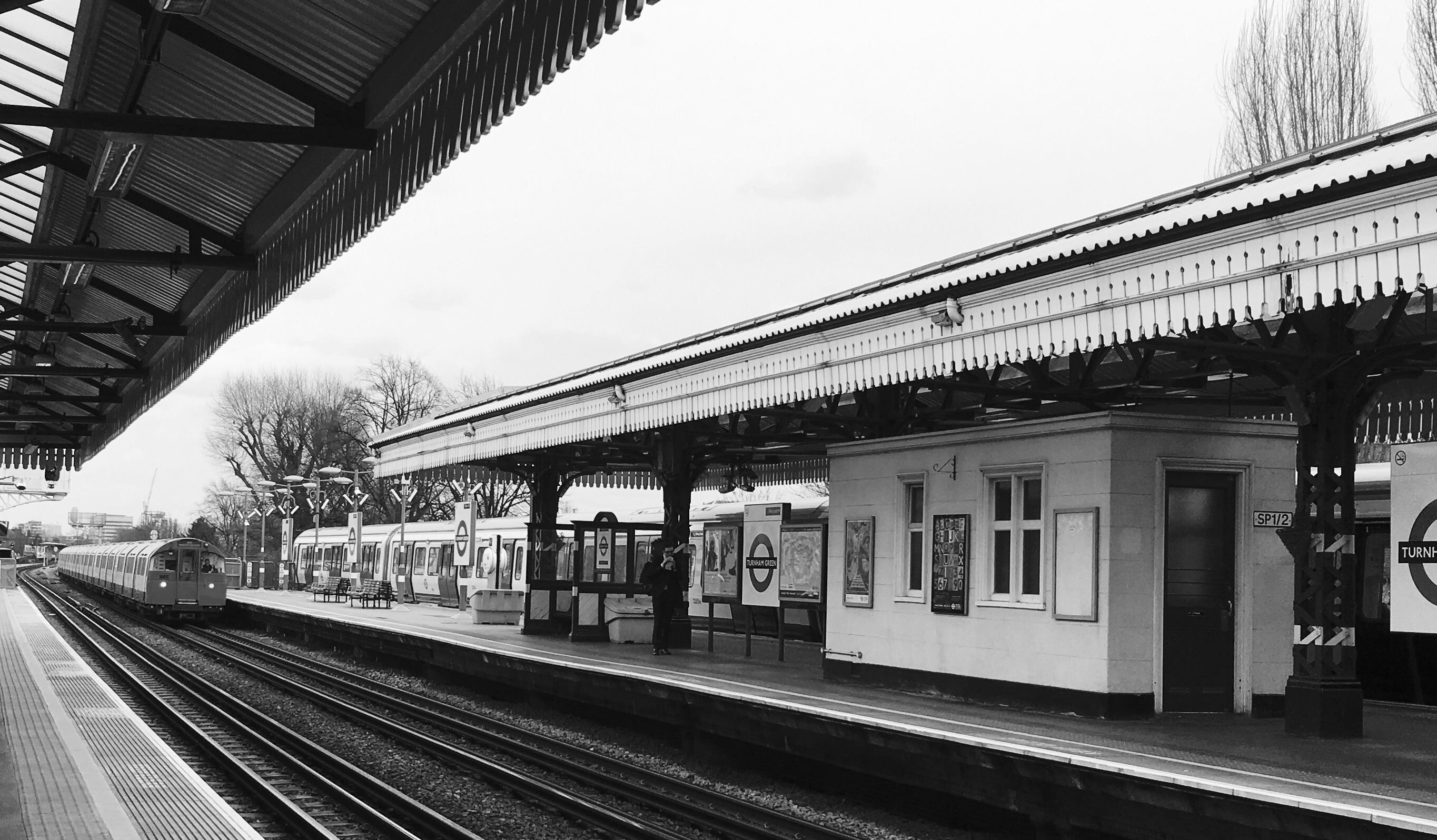
So far we have discovered that there are many oddities on the Underground network. It does rather begs the question – How many oddities does it take for the oddities to no longer be oddities? I know right? Meta.

Turnham Green is another station with an oddity. It gets its regular service from the District Line, but early in the morning and late at night it is also served by the Piccadilly Line as well. This regular irregularity is unique to Turnham Green. Double Meta.

In a few years time, when the Piccadilly Line is re-signalled and receives new stock, TfL plan to introduce a full time service here. Turnham Green’s Meta will be De-Meta’d. Which is Triple Meta.

Did you keep up?

Image copyright A Carter – CallingAllStations.co.uk

Station Index

062/270: #ChiswickPark – The Berliner

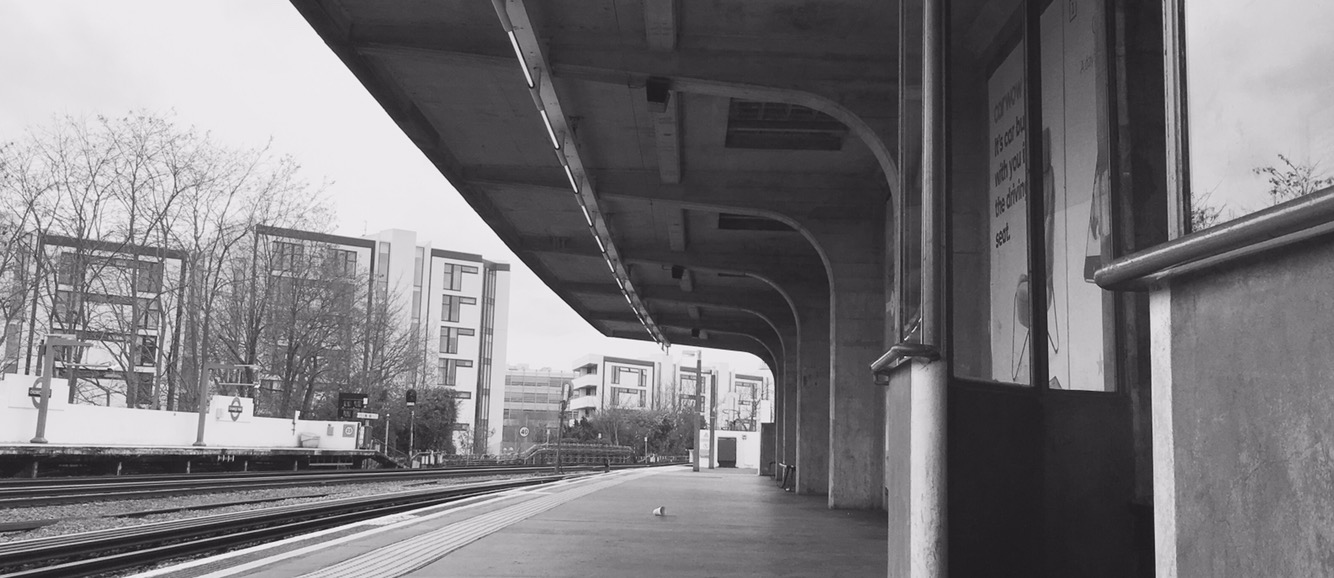
Tucked away in a crevice between the important interchange of Acton Town and the impossibly awkward Turnham Green is a station you’ve probably forgotten existed. It’s a station I too have dismissed in the past and, as you rush through on the centre tracks at speed, Chiswick Park looks like a dull pile of unloved and uninspiring concrete. But dismiss at your peril…

Chiswick Park’s cantilevered concrete canopy (and you can’t say you didn’t enjoy that tongue twister!) is inspired by Alfred Grenander’s Krumme Lanke station in Berlin. Once this is pointed out to you the grubby concrete suddenly gives way to ruggedly efficient and simple German engineering – and the station is seen in a whole new light. Germany was still recovering from a crippling depression after World War I, and large infrastructure projects to re-energise the country had to be constructed in a cost effective manner. The simplistic no-frills nature of Krumme Lanke is a perfect example of how pre-fabricated concrete can provide cheap and quick yet highly effective results. This was obviously something Charles Holden was particularly interested in when he designed the platforms here at Chiswick Park.

Image copyright A Carter – CallingAllStations.co.uk

Station Index