034/270: #DollisHill – The Dolls

Station 34. We’ve seen Green. We’ve seen Holden. We’ve seen unexpected architecture, both good and bad. We’ve seen mosaic cats and black horses and we’ve seen cathedrals and flying saucers.

It’s fair to say we’ve seen a lot. But nothing will prepare you for what we saw at Dollis Hill.

Dollis Hill’s surface existence is fairly apologetic. It’s more of an alleyway between two residential streets than a station entrance. The area is a bit grubby, but hey, we’re opening our eyes to all that London has to offer, warts and all. (Although this is definitely on the wart side of the spectrum). Cast your eyes on the house on the right and what lies in the windows…

There’s a hell of a lot going on in this image, not just the EXCEPTIONALLY CREEPY DOLLS but the “Beware of the Cat” sign, the graffiti, the driveway full of rubbish, the decaying house and the opened box of matches on the wall. One has to assume the owner of this house has a crooked sense of humor, is mad, or both.

They say a picture can paint a thousand words. This one paints a thousand questions.

Image copyright A Carter – CallingAllStations.co.uk
033/270: #WillesdenGreen – The Louis Wain Cat

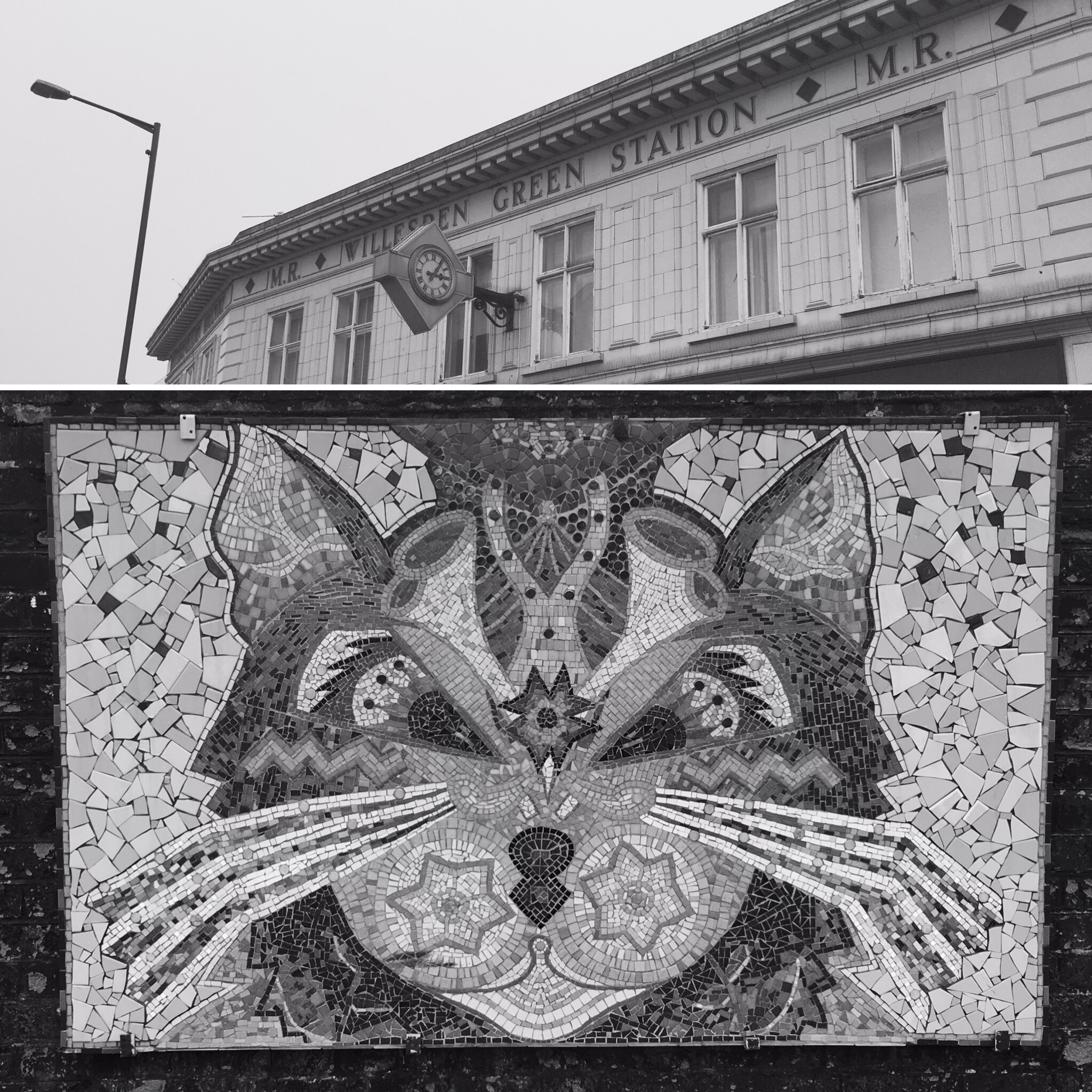
I’ve never been to Willesden Green before, and had it not been for this challenge then I wouldn’t have discovered the works of Cat Artist (yes you read right), Louis Wain.

Wain moved to the area in the mid 1880’s with his wife Emily who was suffering from breast cancer at the time. As Emily grew sicker, she would often be comforted by a rescued stray cat called Peter. Wain started to use Peter as inspiration and began sketching him and other feline portraits. Emily encouraged Wain to publish sketches of Peter but she sadly died before this became a reality. After her death, Wain continued what would become an obsession with cats (and who can blame him… cat’s are awesome), which saw his work take on a range of disciplines, including anthropomorphism and abstractism.

None of this I would have discovered had it not been for a mosaic homage to Wain sitting opposite the station. The striking tribute was put together by the local community group Willesden Green Town Team led by Debra Collis.

Image copyright A Carter – CallingAllStations.co.uk

032/270: #Kilburn – The Shoot Up

Kilburn sits on the curiously named Shoot-Up Hill. It conjures up the image of highwayman hold ups and dueling gangsters doesn’t it?

Sadly the name is thought to originate in the topography of the landscape as the old Roman road suddenly “shoots up” a hill towards Cricklewood.

Well that was disappointing wasn’t it. I suppose we better get back to the trains…

Image copyright A Carter – CallingAllStations.co.uk
031/270: #WestHampstead – The Trio

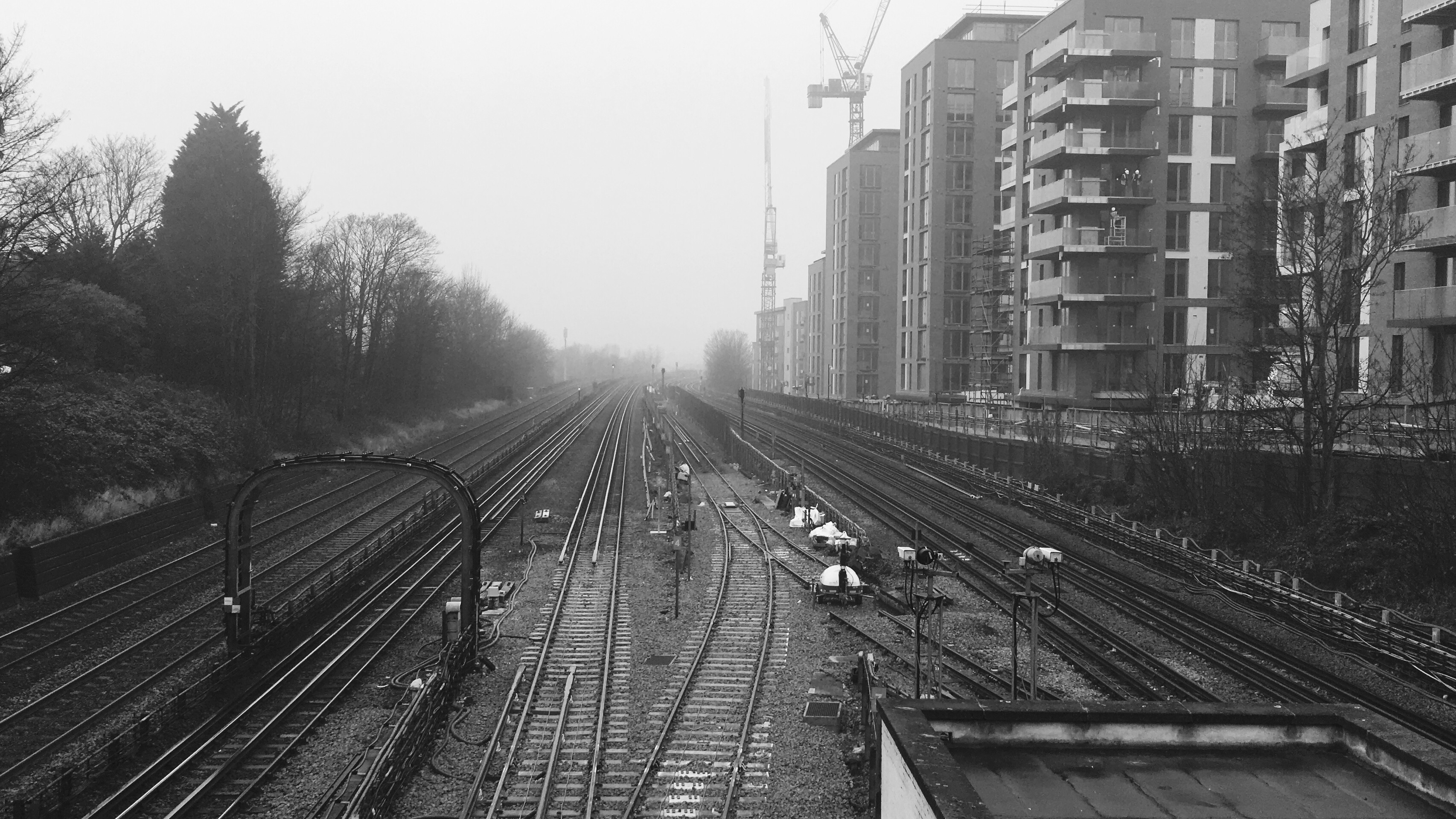
A glance over the parapet at West Hampstead shows the three separate routes running beneath us. From left to right we see the Chiltern Main Down, Chiltern Main Up, Metropolitan Northbound, Jubilee Northbound, Jubilee Southbound and Metropolitan Southbound; all of which multiplex to create a true eclectic mix of local, suburban and intercity services. West Hampstead served exclusively by the Jubilee Line is of the former, with a single island platform located between the six lines.

West Hampstead tube station is one of a trio of stations on the same short stretch of West End Lane. Out of shot, and 280ft to the right of the photo, lies West Hampstead (Overground) on the former LMS North London Line. A further 380ft on again is West Hampstead Thameslink on the Midland Mainline. The combination of West Hampsteads makes for a total of 14 lines running through these parts. It’s not uncommon for two separate stations to be located in such close proximity, however three is rare. It is likely to be the closest, if not only, instance of this happening in the country.

At one stage all three stations had separate names, so it’s quite unusual that they all ended up sharing the same title seeing as this practice was often actively avoided to mitigate public confusion. It’s been proposed to marry all three stations together under an umbrella of “Hampstead Interchange” with some form of internal connection. Such plans are yet to come to fruition.

Image copyright A Carter – CallingAllStations.co.uk

030/270: #Swiss Cottage – The Pub

Along with St. John’s Wood (029)Swiss Cottage plays host to the familiar platform stylings we’ve already seen at many imposing 1930’s stations. It seems odd then, that very little surface level presence is, or was, provided. A short turret marks one of the subway entrances, but without this and a number of more modern roundels, it wouldn’t be all that obvious that a station exists here.

Information on the surface exploits of Swiss Cottage station is thin on the ground. One would have to assume that the “subway turret” was a later addition, and that the original station, much like Bethnal Green, had no surface structures at all.

With not much to photograph, let’s instead turn our attention to the station’s name sake – The Swiss Cottage pub. Built as The Swiss Tavern, this building was constructed in 1840 in the then popular Swiss style. When opened it would have originally stood in open countryside, offering a stop to horse drawn coaches heading in and out of London.

There are 6 tube stations named after pubs, can you name the other 5?

Image copyright A Carter – CallingAllStations.co.uk