011/270: #Southgate – The Flying Saucer

Doing Southgate justice with a single photo was very hard indeed. The ideal shot from Winchmore Hill Road was blighted by heavy cloud cover and poor lighting conditions. Southgate is of course one of the most famous and most photographed of all the Holden stations, if not all tube stations all together.

Designed to look futuristic, Southgate was way ahead of it’s time. An illuminated Tesla coil sits aloft a flying saucer shaped ticket hall. It’s complemented and flanked by roundels sitting on top of circular bus shelters. Architecturally Southgate is quite something, but sadly it’s last renovation was nearly 10 years ago and it’s now starting to look quite tired.

Image copyright A Carter – CallingAllStations.co.uk
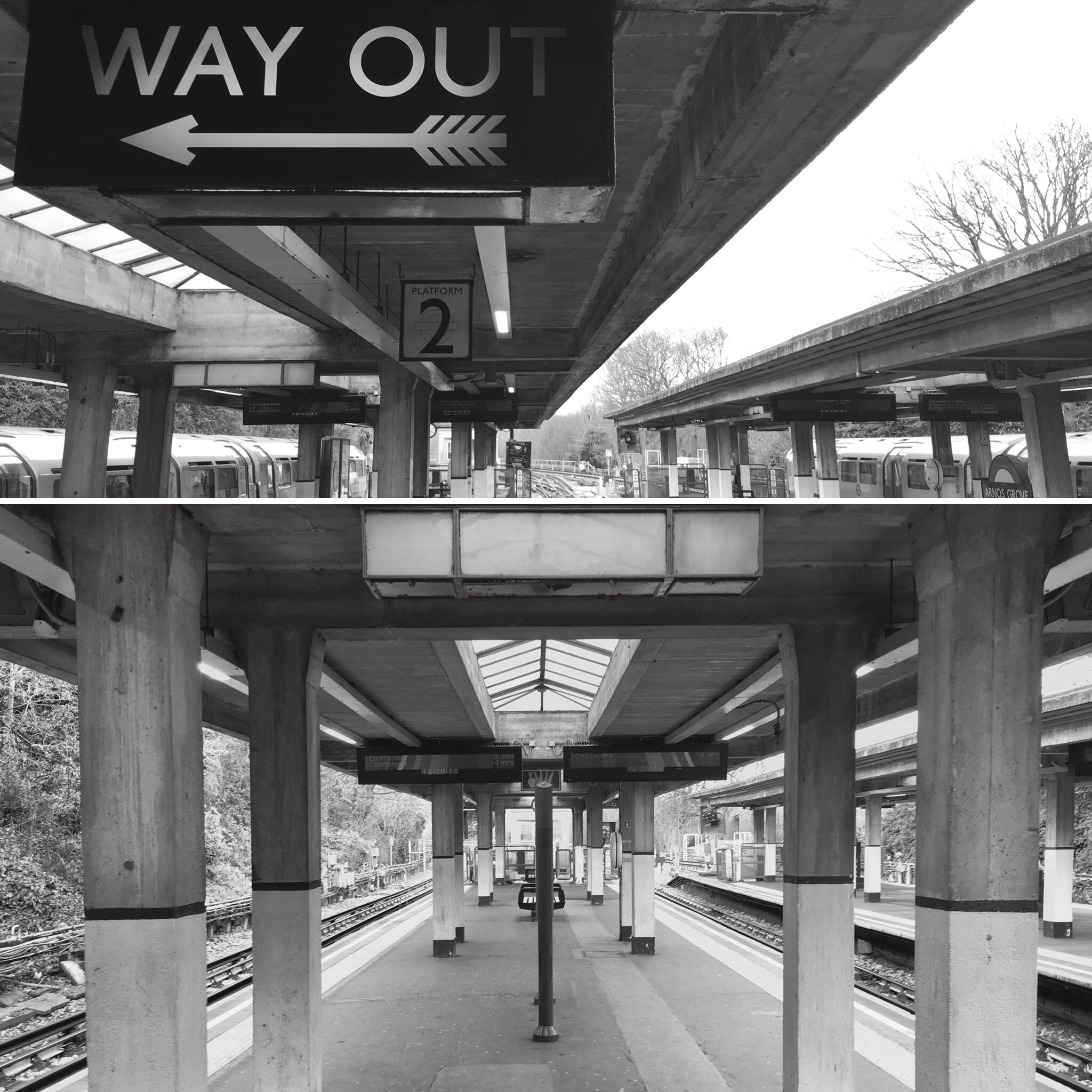
010/270: #ArnosGrove – The Unexpected

I never really pegged Arnos Grove as being particularly interesting, both in or out of the station but I must say I was pleasantly surprised. The line briefly surfaces here and this is the first station since South Woodford (001) that is above ground. There’s a lot to see at Arnos Grove and choosing a picture was difficult. There’s the perfectly symmetrical platform canopies, the period platform signage and way finding, and the circular drum shaped station building is possibly the most impressive Holden we’ve seen so far.

The beauty of this challenge means I’m getting to see parts of the city I wouldn’t normally visit. On the trip up the Piccadilly Line we supplemented this by walking between every other station as well. We took the tube from Caledonian Road (003) to Holloway Road (004), walked from there to Arsenal, back on the tube to Turnpike Lane and so on…

The highlight of this practice was the walk between Arnos Grove and Southgate (011), taking in perfect suburban streets, picturesque parks and a quite unexpected village green.

Image copyright A Carter – CallingAllStations.co.uk
009/270: #BoundsGreen – The Box Style

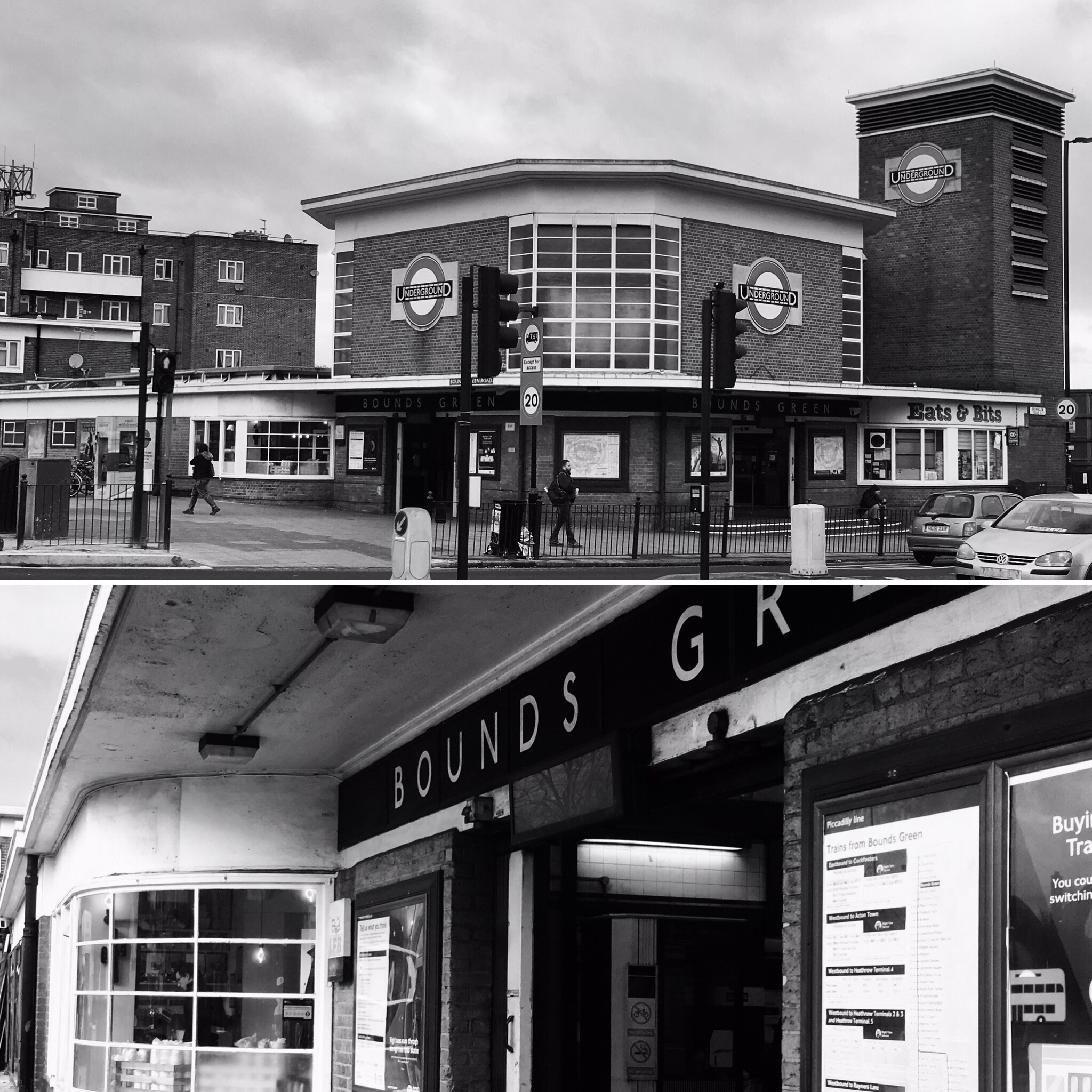
Bounds Green is a variation on Holden’s “Sudbury Box.” This octagonal shaped station features high sided window frames which allow light into a spacious ticket hall bellow. This concept is repeated across the network and gains it’s name from Sudbury Town station also on the Piccadilly Line. It was actually designed by Holden’s colleague, C.H.James.

Despite it’s crisp and box like form, Bounds Green still includes the popular Modernist design feature of curved window frames, as seen in the street level shop fronts.

Image copyright A Carter – CallingAllStations.co.uk

008/270: #WoodGreen – The Listed

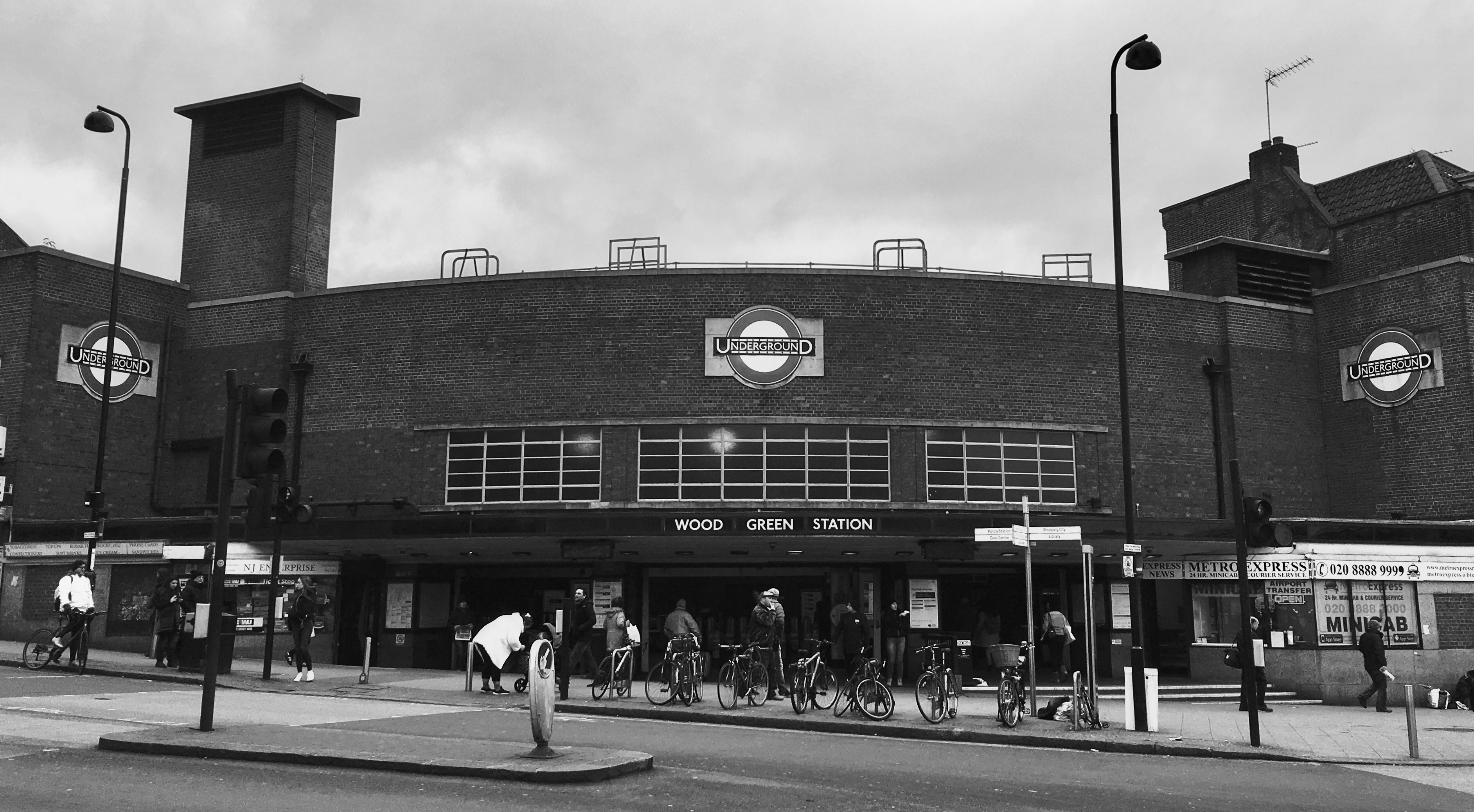
Examine most of the stations north of Turnpike Lane and you’ll soon see that Wood Green stands out. Limited by the size of the corner plot, Holden was forced to change what had become a fairly standardised design on the Piccadilly Line extension of stand alone buildings with a single tower structure.

Wood Green instead sweeps into the surrounding shopping arcade. The ventilation towers were a later addition which somewhat spoil the symmetry. It was the last station between Turnpike Lane (007) and Cockfosters (013) to receive listed status which finally came in 2011. It highlights the lasting importance of Holden’s designs on the network

Image copyright A Carter – CallingAllStations.co.uk

007/270: #TurnpikeLane – The Holden

In 1923 Frank Pick, general manager of the UERL, commissioned Charles Holden to design a new facade for Westminster station. This began a famous decade long partnership between Holden and Pick that would see them design huge swathes of new and refurbished station buildings across the network.

At Turnpike Lane we see one of his later additions in the modernist Art Deco stylings. I don’t think it’s the best example of his work, but nevertheless it marks a stark contrast to the poky two story Leslie Green facades of the inner city. Whilst Green’s work is very much about fitting new stations into an already crowded inner city, this was the birth of suburbia; Holden and Pick wanted new stations to be the central focus of new communities. Grand concourses match the spaciousness of the outer boroughs.

Image copyright A Carter – CallingAllStations.co.uk