039/270: #Neasden – The Meatballs

The industrial area around Wembley and Neasden is punctuated by an enormous rail depot (the largest on the London Underground) and is bisected at its throat by the A406 North Circular Road. Neasden represents how easy it is for manmade infrastructure to completely isolate two neighbouring sections of land. Transport is supposed to mobilise a city, however the school you attend, your council and sometimes even your social standing, can all be defined and influenced by these arbitrary infrastructure boundaries.

Neasden station and Wembley IKEA are a mere 350 yards apart. You can see the store from the station, but you might as well be in Morden. Navigating between these two places involves a 20 minute 0.8 mile walk through dark underpasses, precarious walkways, and a stroll alongside a 6 lane expressway. It’s dirty. It’s smelly. It’s polluted, and it’s hardly any wonder that doing so is so actively discouraged by the sheer amount of time it takes and the awkwardness of the route. Transport should unite a city, but when it’s done badly, it breaks it in half.

All this for some flaming meatballs…

Image copyright A Carter – CallingAllStations.co.uk

038/270: #Stanmore – The Edge

I love looking at Stanmore on a map. Go on, go on Google Earth and look at Stanmore station. There’s one more street beyond it, and then London just… ends.

I don’t think there’s anything quite like it anywhere else in the city. London’s sprawl usually seems to transition slowly and gradually from urban chaos to garden-filled suburbia to open fields. Even at its outer reaches the green spaces are still interspersed with residential streets, smaller communities and the odd out of town Tesco. But not at Stanmore. Houses, houses, cars, offices, houses, Jubilee Line, houses, houses… Nothing.

If the Jubilee Line continued on it’s current alignment north by northwest of Stanmore, then it would bump into absolutely nothing between here and the M25.

Image copyright A Carter – CallingAllStations.co.uk
037/270: #CanonsParks – The Penultimate

I find penultimate stations very interesting. They’re always so quiet. Quieter even than their neighbouring termini. Ruislip Gardens, Theydon Bois, Oakwood (012), Hillingdon, Canons Park. All quiet. Why?

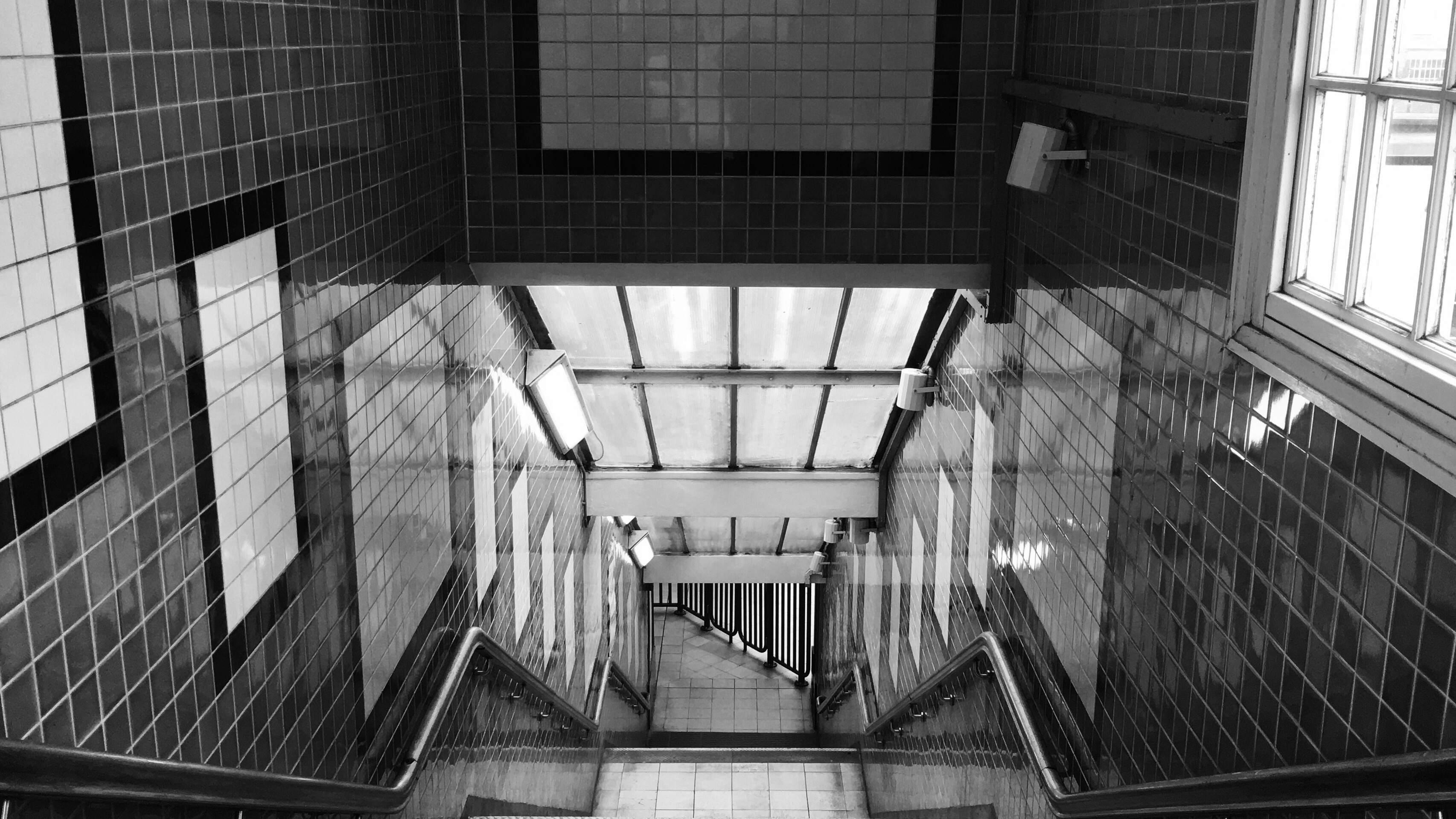
So what do you say about the Jubilee Line’s least used station? It’s got a couple of plain entrances beneath an over-bridge, a small wooden ticket hall, two modest platforms with canopies and some brown (so very brown) stairwell tiles.

It’s bright, clean, neat and well kept, but you can tell it was never destined for bigger or busier things.

It’s quiet.

Image copyright A Carter – CallingAllStations.co.uk

036/270: #Queensbury – The Roundabout

The parish of Kingsbury (035) had already existed for some time prior to the arrival of the Metropolitan Railway. Queensbury on the other hand was a completely new suburb. This is evident by the imposing nature of the station facade and grand avenue leading up to it.

This was suburban new-town planning on an even grander scale than metro-land. And what should be at the heart of every new community? A station – with attractive electric trains through to the city. An advert for families keen to move out of the cramped conditions of the inner city.

That ‘advert’ for the station still survives in the form of this attractive roundel beacon in the middle of Queensbury roundabout. What better way to marry car and train.

Image copyright A Carter – CallingAllStations.co.uk
035/270: #Kingsbury – The Impersonator 

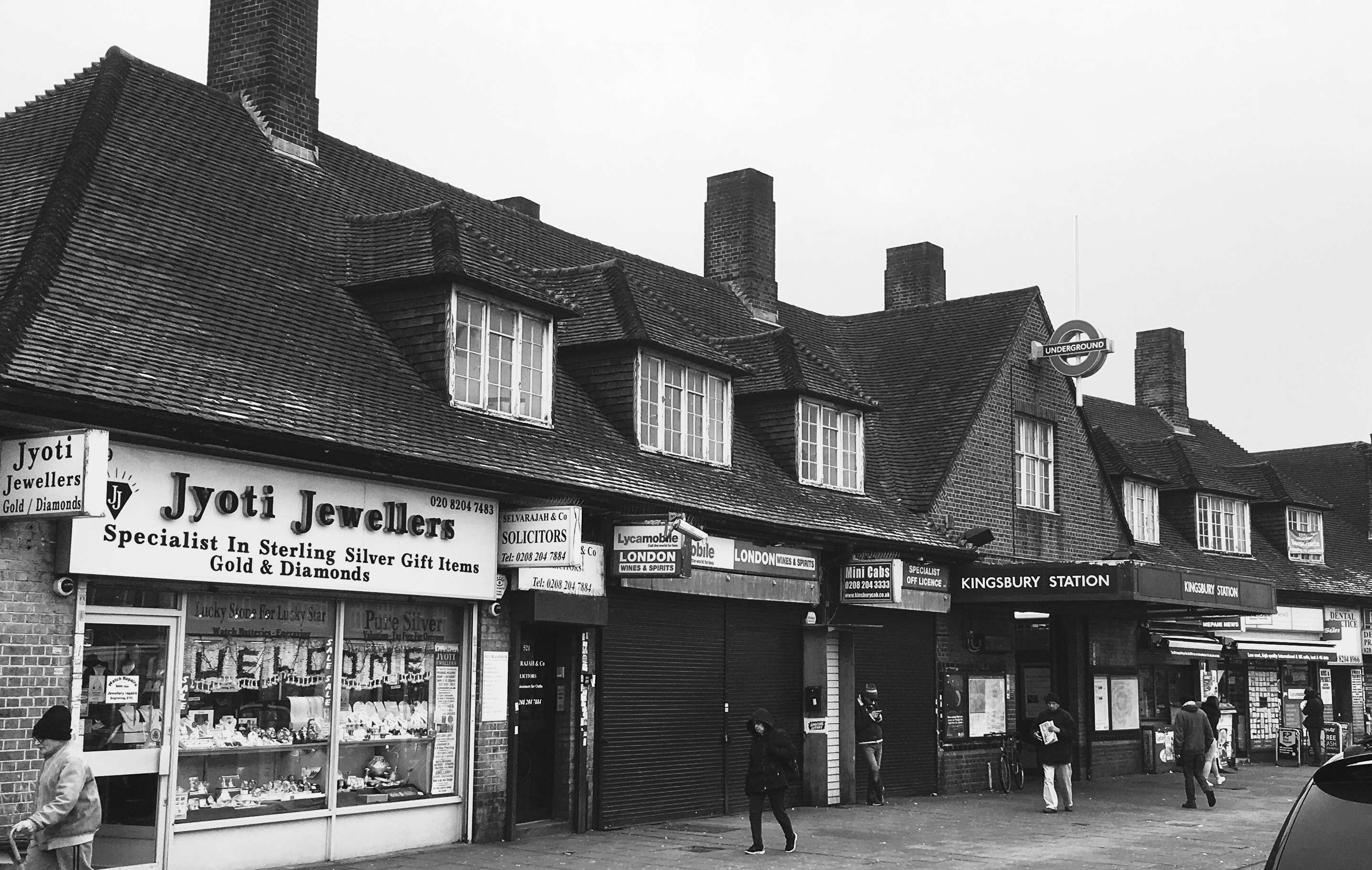
Kingsbury was built with the Stanmore branch in 1932 by the Metropolitan Railway. It’s a clear departure from the Art Deco styling of the decade that we’ve been so used to seeing elsewhere on the network. It wouldn’t be until 1939 that the newly formed London Underground would absorb the Metropolitan Railway; so at this point their station design was still largely independent of the growing uniformity of the UERL Pick-Holden partnership.

Instead the Metropolitan Railway favoured mimicking the earlier 1920’s Arts-and-Crafts movement as seen at Watford and Croxley, both built some 8 years prior. This isn’t surprising, even though architectural tastes had moved on, brand image and identity was important to Railway companies. It is comparable to the practice seen after World War II when many Holden designs resumed construction even though popular tastes had perhaps moved on.

Sadly the station building at Kingsbury is somewhat neglected, with part of it’s commercial space clearly lying empty. One has to wonder what control, if any, TfL still has over the property and whether it will ever be restored to it’s former glory.

Image copyright A Carter – CallingAllStations.co.uk