072/270: #Westminster – The Monolith

Westminster‘s massive monolithic shaft that leads down to the Jubilee Line platforms is another example of sheer architectural triumph that was the JLE. Like Canary Wharf (056), Westminster has a very industrial feel with exposed concrete and metal jutting out from every angle supporting escalators and walkways. It feels like you’re walking through the bowels of an interstellar cruise liner and I love every inch of it.

So iconic and representative of London Underground’s architectural pedigree, this station was voted 10th in the Transport Museums’ list of ultimate London Design Icons. It was one of only two stations to make the list – sitting proudly alongside other design greats such as the Black Cab and Harry Beck’s map.

Image copyright A Carter – CallingAllStations.co.uk

Station Index

088/270: #FinchleyRoad – The Glacier

I’ve been struggling for weeks to come up with a title for Finchley Road. I mean sure there’s history here, we’re still of course in the realms of Metropolitan Railway grandeur. And yes, though grubby, the station frontage is interesting in its own right but there is to an extent only so much I can bang on about Victorian Railway mania or oh look how lovely is that facade’…

So instead here’s a fact for you:

According to earth analysis as part of a recent BBC documentary, Finchley Road station marked the southern most point of a glacier that once covered most of the country in Ice Age Britain. Huh!

Any comparison to the speed of a glacier and the Jubilee Line are purely coincidental. 

Image copyright A Carter – CallingAllStations.co.uk

Station Index

071/270: #WhiteCity – The Right-Hand Drive

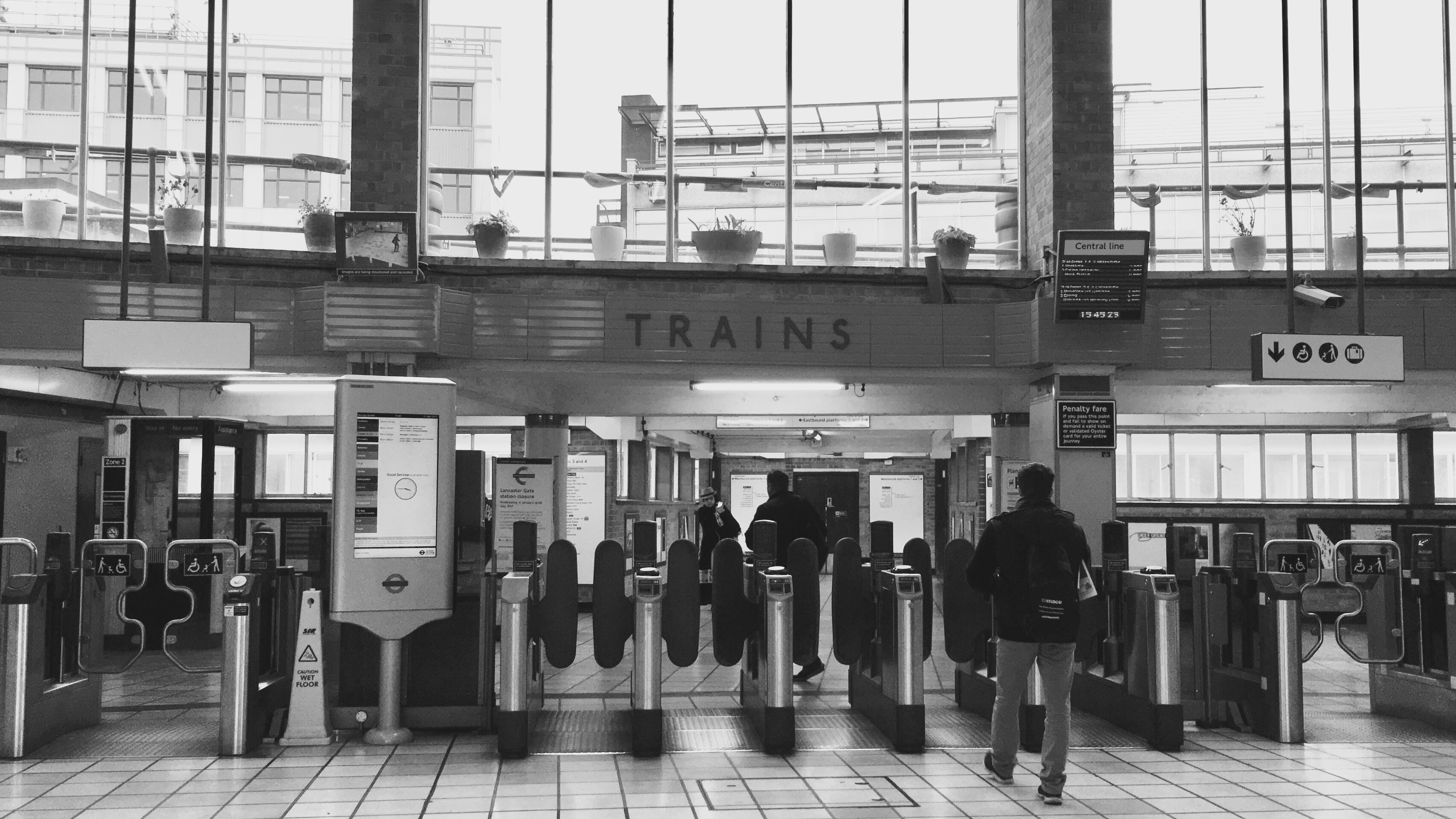
It’s certain that Seymour, Bilbow and McGill took a lot of their influence from similar Charles Holden structures on the Central Line when designing White City. Some of Holden’s signature features and principles are still plain to see, including the boxy brick facade with the high sided ticket hall window. However the 1930’s art deco embellishments of comparable Holdens are starting to wane and the austerity of post-war Britain is showing through. The individual window panes are much larger and therefore there are less of them. This no doubt allows the maximum amount of light into the ticket hall below and means less electric lighting is needed. The sweeping curved shop fronts found at say Bounds Green (009) have been abandoned for simplistic square office blocks. You can see the very transition from 1930’s art deco grandeur to 1950’s brutalism right here at White City. The powers of the time obviously agreed as the design won a Festival of Britain award.

Though a handful of station on the Underground have right-hand running, White City is the only above ground station to feature this non-standard arrangement. This dates back to the former Wood Lane loop on which the station is built, which allowed westbound terminating trains to run round and head back east without stopping for the driver to change ends.

Image copyright A Carter – CallingAllStations.co.uk

Station Index

070/270: #WoodLane – The Newest

In the reflection of the angled glass panes fronting the station facade, cranes work away in the background turning the BBC’s former home at Television Centre into “affordable” apartments. The whole area around Wood Lane is going through lengthy re-generation, and so we arrive at London Underground’s newest station, built to support the centrepiece of that very scheme – The Westfield shopping complex.

Opened in 2009 and designed by Ian Ritchie Architects, Wood Lane is definitely a product of its time with stainless-steel, granite and glass adorning every corner. The materials used give it the feel of a baby Canary Wharf (056).

Image copyright A Carter – CallingAllStations.co.uk

Station Index