080/270: #StonebridgePark – The Camera

I often get asked what camera I use to shoot video for my YouTube Channel. With the exception of a few early videos and rare occasions where I need multiple cameras I nearly always use my iPhone. In the earlier days this was a 5c but as of last year this was upgraded to a 6s. I use this as my camera of choice for a few reasons:

  • Firstly it’s compact and is always with me. Pretty self explanatory that one, but every so often an opportunity pops up where some content can be extracted from day to day life…
  • Secondly the internal image stablisation on iPhones is, in my opinion, second to none. I began making YouTube videos at heritage railways and naturally I’d film quite a few shots out the window of a bouncy MkI. I soon purchased a mid-range digital stills camera which also supported video. Although it’s possible to obtain some really nice shots with the Samsung NX3000 with beautiful depth of field, the image stabilisation – or lack thereof – rendered anything I’d shot on the move unusable. I therefore quickly reverted back to my iPhone for nearly all applications.
  • Finally, and the reason I’m talking about all of this, is discretion…

If you rock up to a tube station with a nice big shiny DSLR, it won’t be long till you’ll be paid a visit by a member of staff asking what you’re doing. They may even ask you to stop. We learnt this the hard way at a number of places whilst shooting In Search of Network SouthEast. The trouble with a big professional DSLR is that it draws a lot of attention from staff and public who may not like you taking shots. Using a phone on the other hand, well, I just blend right into the crowd. How many times have seen someone on the street pull out their phone and take a quick snap of something, no doubt to be uploaded to the Twittorz or the Facetagrams. It looks normal.

I’ve since had conversations with good friends who work for the company who have advised me on the matter and though TfL’s rules on photography are a bit wooly, you should be able to take photos as long as you don’t use a flash or tripod and are keeping safe whilst you do so. It may also be an idea to let staff know of your presence, especially if you’re going to be there a while. However I still choose the iPhone for it’s discrete and un-confrontational nature.

So is this choice foolproof? Well, as you’ve guessed, seeing we’ve got this far without mentioning a specific station, no – there have still been occasioned where I’ve been quizzed about what I was snapping. You might expect this to happen at major, busy Zone 1 stations but you’d be wrong. It nearly always occurs at the more unusual suburban stations. Stonebridge Park was one of those stations.

Granted, Stonebridge Park isn’t a particularly interesting station (and without this story I’d be struggling for things to say about it) so perhaps the member of staff who quizzed me on this occasion was perplexed at why I’d want to take pictures there. The trouble was he wasn’t very pleasant about it, chasing us down the stairs, demanding that we told him what we were taking pictures of and then flat out refusing to let us take any at all. Now I tend to freeze up in confrontational situations like this and after being greeted with a blank stare when we explained we were interested in station architecture, the whole experience did make feel like I was being treated like a criminal.

I understand that security needs to be tight, and there certainly are times and places where photography would not be appropriate but perhaps a little more discretion needs to shown by TfL staff to people who are travelling round the network to discover, learn about and share hidden delights. In fairness I have since tried to take a more confident stance and rather than backing off into my shell, try to explain more about my mission and online endeavors with this project. Sadly the last time this happened, at Snaresbrook, the member of staff lost interest almost immediately. Still, at least he left me alone.

So after all that, here’s the boring picture of Stonebridge Park we weren’t supposed to take.
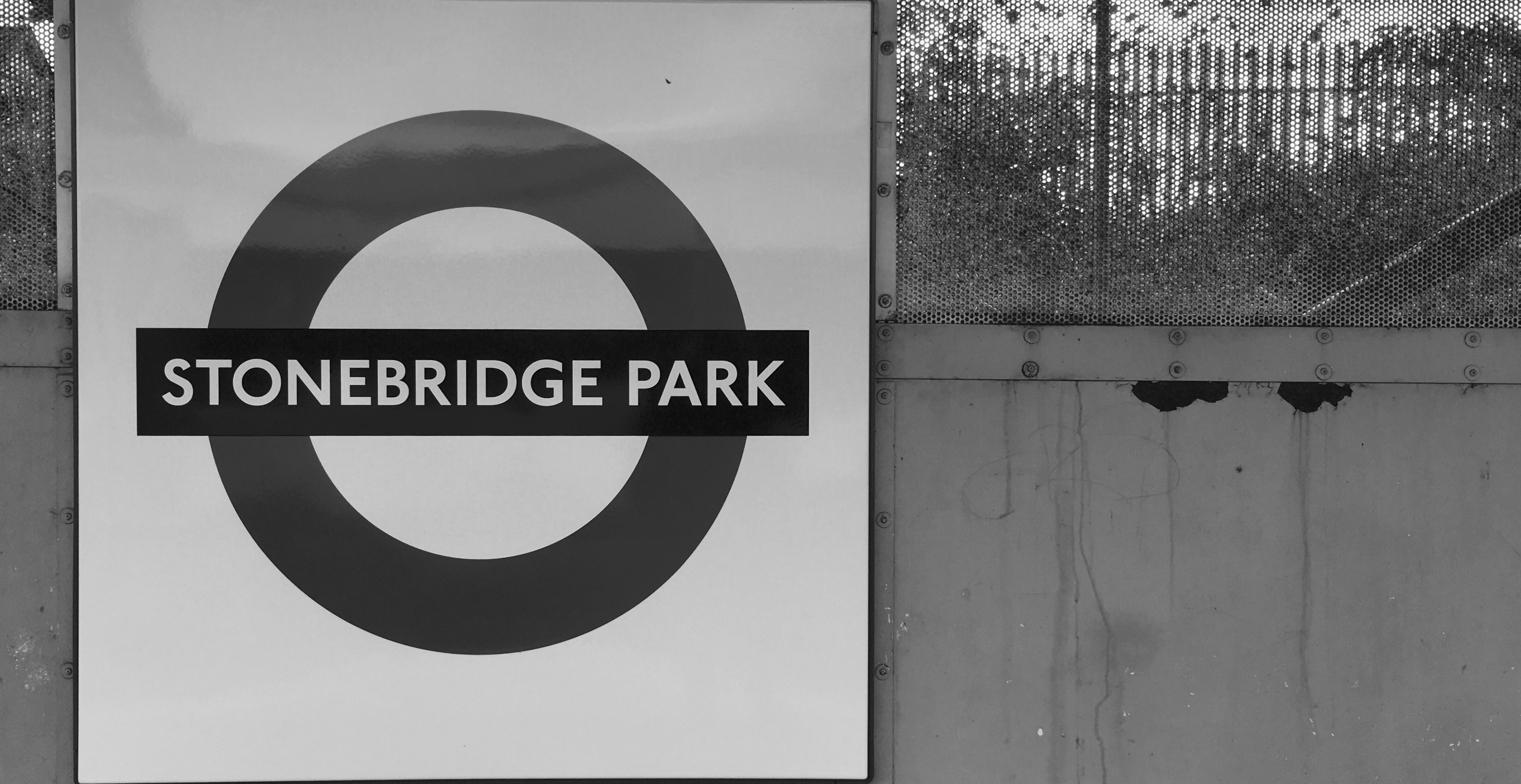
Image copyright A Carter – CallingAllStations.co.uk

Station Index

079/270: #Harlesden – The Harlequin

For a brief spell in the 1990’s the Watford DC Line was operating under the moniker “The Harlquin Line.” Details as to how this came about have been lost in the mists of time, but a few forums suggest the title was acquired from a public naming competition ran by Network SouthEast.

Some say that Harlequin is a portmanteau of HARLsden and QUEENs Park. Others have suggested that the inclusion of Harlesden is merely a happy coincidence and the name is actually a triple portmanteau of HARrow, WilLESden and QUEENs Park.

At some point, perhaps after privitisation, the Harlequin name seems to have dropped out of use in favour for the less interesting “Watford DC Line.” Either way if you’ve got any information about how this brief but quirky name came about, do drop a comment below…

Image copyright A Carter – CallingAllStations.co.uk
Station Index

078/270: #WillesdenJunction – The Confusing

Willesden Junction shouldn’t be that confusing. It has 5 platforms. 2 up top for the Overground, 2 down below for the Bakerloo and Watford DC lines and a 5th lesser used bay that we don’t really need to worry about. The thing is, it’s not Willesden’s platform layout that we found confusing, it’s the connecting passageways and non-descript exits that really will disorient and bemuse you.

I suspect it’s down to the history of Willesden Junction. This used to be 3 technically separate stations (the two we’ve mentioned already plus a now demolished main line station), each built stand alone with their own unique entrances. Sure they’ve been knitted together after, but the entrances have not been sufficiently rationalised. This probably wasn’t too much of a problem until very recently when the advent of the automated ticket barrier meant you couldn’t simply walk back through the station if you got it wrong. Now, exit at the wrong gateline and, due to the nature of the railway landscape, you’re about half a mile away from where you actually wanted to be.

The signage doesn’t help either, especially for new comers not really sure of their surroundings. Victoria and I learnt this the hard way when we both agreed to follow signs for “Buses” blissfully unaware there were in fact “Buses” at both exits…

Image copyright A Carter – CallingAllStations.co.uk

Station Index

077/270: #BakerStreet – The Metropolitan

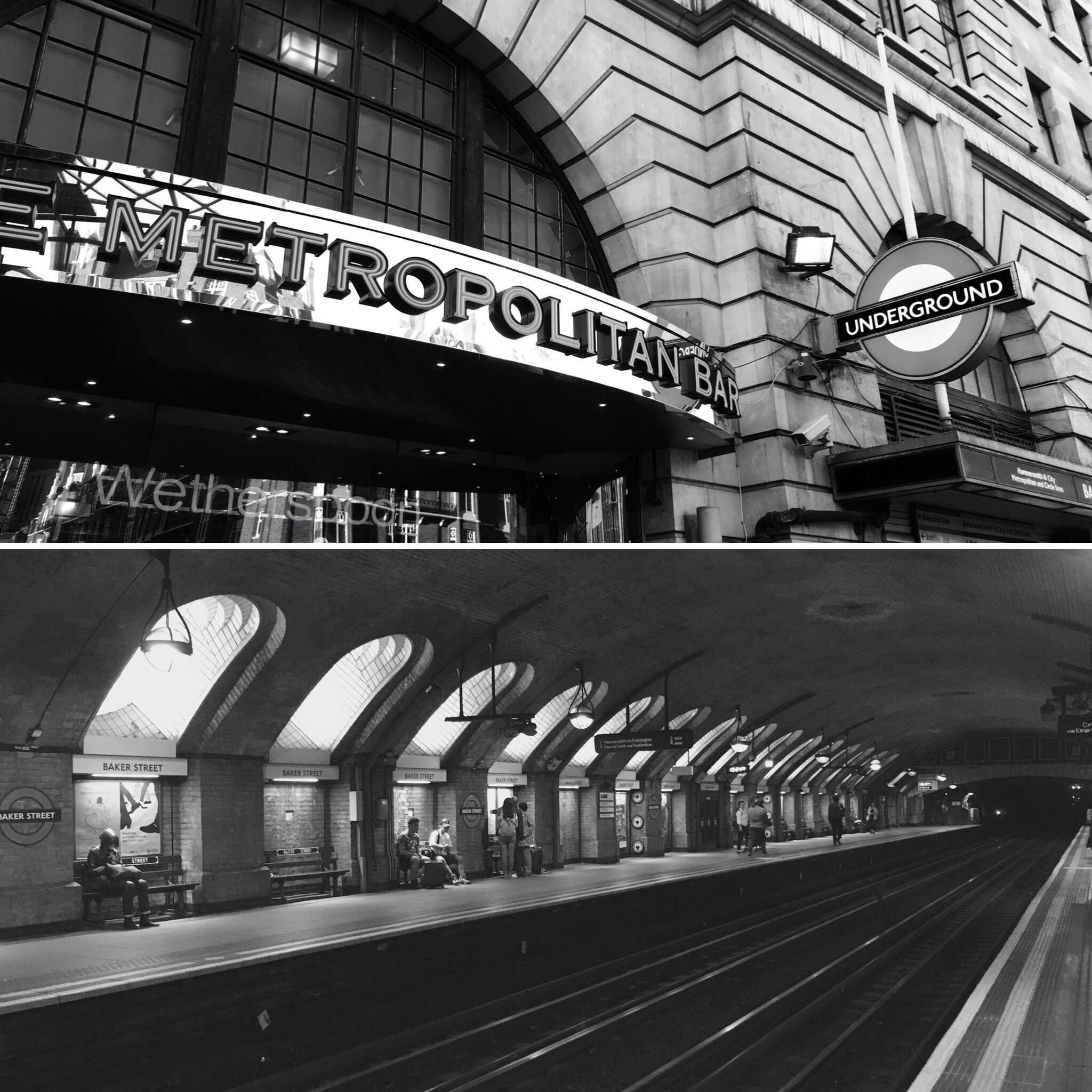
One of the first underground stations to be built, Baker Street is certainly steeped in history. The world’s first underground railway was powered by steam and it’s almost difficult to imagine that this clean well-kept station once hosting loud and billowing steam locomotives. Anyone who’s ever ridden behind a steam loco going through a tunnel will tell you how quickly these cramped spaces fill with sooty smoke. However even in the 1860’s, our Victorian cousins were thinking about how to mitigate the use of steam power in such confined conditions. Compressors were used on the locomotives to help reduce the amount of exhaust smoke and special considerations were given to the designs of the stations and infrastructure. The construction of the arched retaining walls here at Baker Street on the original platforms (now served by Circle and Hammersmith and City Lines) were famously designed to let daylight in and steam and smoke out.

Upstairs is one of my favourite features of any Underground station – Chiltern Court, the grand Edwardian era Charles Clark building which housed the Metropolitan Railway’s headquarters, luxury accommodation and a hotel. This is not a feature unique to the Metropolitan Railway and, as we know, some of London’s top architectural delights are former multipurpose railway headquarters. Facilities like those here at Baker Street and others at St. Pancras and Marylebone, were built to not only welcome the railways’ passengers but to provide a showcase for the company’s might and wealth.

Part of Chiltern Court is open to the public in the form of The Metropolitan Whetherspoons which is certainly well worth a visit.

Image copyright A Carter – CallingAllStations.co.uk

Station Index

076/270: #LiverpoolStreet – The Split Flap

I have this memory of the main line terminal at Liverpool Street. I’m not sure when it was from because despite it being the closest terminal to where I live (and have lived), I don’t actually get to use it that much. On occasion I’ll divert through here and use the Chingford Lines if the tube really has gone pear-shaped, but the Lea Valley Lines and the Great Eastern Main are, for me, better accessed through Tottenham Hale or Stratford (074). This is somewhat of a shame as I love London Liverpool Street, and why wouldn’t you? I mean just look at that fantastic roof!

Perhaps one day I shall talk more at length about Liverpool Street, but as I feel that I’m digressing let’s get back to that memory…

Take a look at the picture above. The year is Nineteen Ninety Something and I’m standing right in the middle of the concourse ‘pit’ as I now like to call it (as you have to descend to it from any of the street level entrances). I’m looking up at the departure board, which these days is made up of rows and rows of yellow LED displays. And I hear this sound…

*click*
*flap*
*click*
*flap*
*click click click click click click click*
*flap flap flap flap flap flap flap*

Note sure what the hell I’m on about? Well think of the opening credits to the John Cleese film Clockwork or play the short clip above! Now imagine that sound ringing out in the cavernous space of Liverpool Street’s concourse.

For anyone not young enough to remember – they’re called Split Flap clocks and are sometimes known as Solari Boards after the display manufacturer. They were common place at large stations and airports all over the world in the 80’s and 90’s. They feature rows and rows or individual display cards which were SPLIT in to two halves and attached to a motorised reel. This would then rotate at speed until the correct image was displayed where the top half of the card would FLAP down over the bottom. Hence the name “Split Flat.” Sadly the Solari Boards, and the glorious noise they made, were phased out in favour of the modern modular LED displays we have now.

I still to this day associate Liverpool Street with the noise of those boards in the terminus above.

Image copyright A Carter – CallingAllStations.co.uk

Station Index