082/270: #SouthKenton – The Book And Its Cover

If ever there was a station personified by the expression “Don’t Judge A Book By Its Cover” it would be South Kenton.

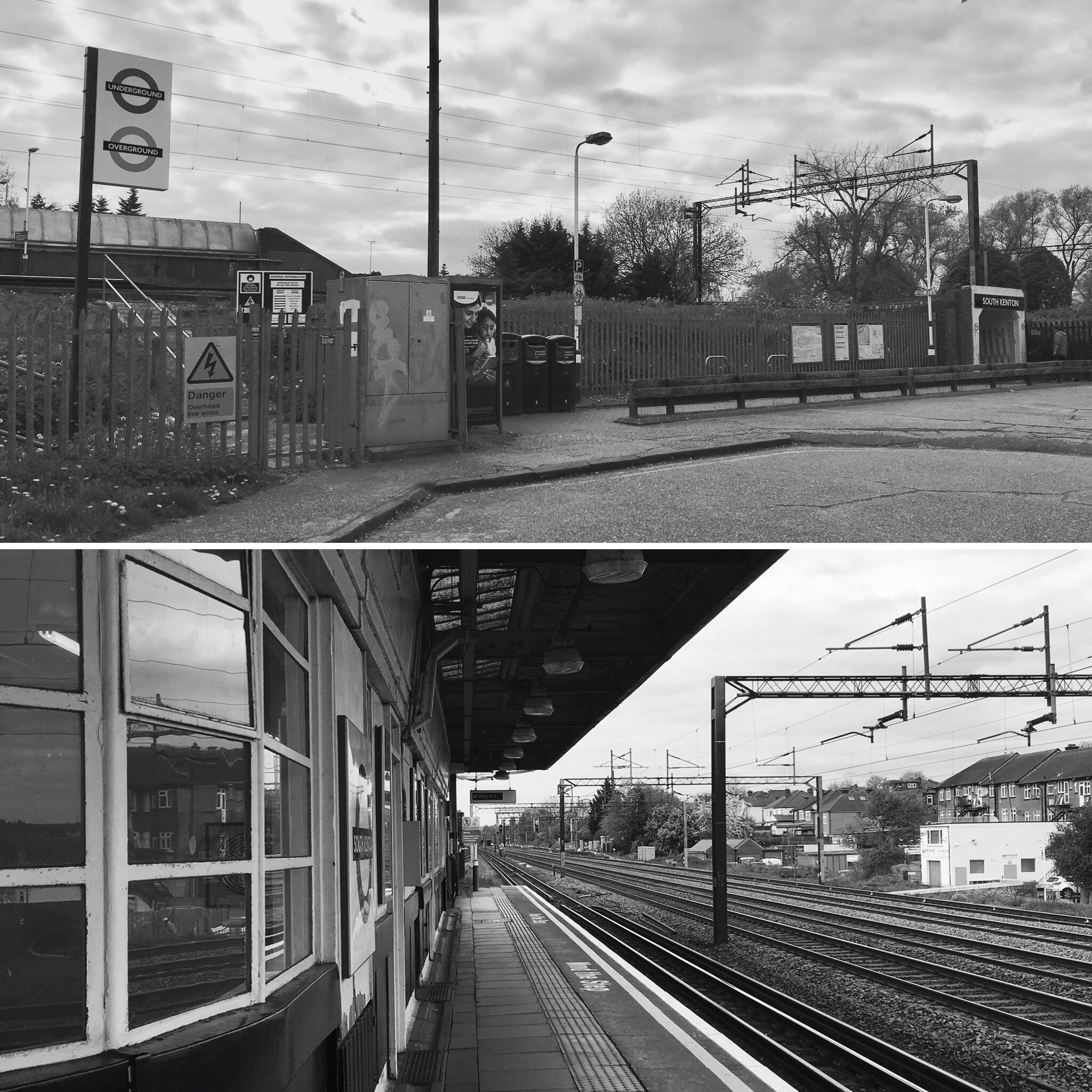
South Kenton’s ‘cover’ is a cramped and depressing underpass tucked away behind some bins round the back of a shop. This apologetic entrance barely announces its own existence, no street level building, no gateline and barely even a ticket office. (And yes this is a station that still has a ticket office, as don’t forget this stretch of line is owned and managed by Network Rail).

However, behind all this bleakness lies a rather pleasant Art Deco canopy and waiting room. It’s the perfect place therefore, in rain or shine, to stand and admire the constant stream of expresses on the West Coast Main Line.

Don’t judge a book by its cover, and don’t judge South Kenton by its entrance.

Image copyright A Carter – CallingAllStations.co.uk

Station Index

081/270: #NorthWembley – The New Lines

What has been so fascinating about this project is not only is it dragging me round areas of London I would perhaps never have visited, it’s also enabling me to discover and learn the histories and origins of unfamiliar lines. I must admit for me, this stretch of the Bakerloo Line has never garnered much interest but scratch beneath the surface and this is a truly fascinating part of the network.

You’ll notice, like here at North Wembley, that the West Coast Mainline and it’s trains are rushing by us – something which started back at Queens Park and will continue all the way up to Harrow & Wealdstone. Now express lines running next to suburban ones is nothing new, but the manner in which it works here is routed in something very clever.

We’re running on part of the original London & North Western Railway route from Euston to Birmingham constructed in 1837 – a route which is a whopping 180 years old. Naturally back then, London was much smaller and the first calling point after Euston was not until Harrow. As London and it’s suburbs grew it was realised that the LNWR’s flagship route, slicing its way through Willesden and Wembley, was missing out on potential urban traffic. Instead of simply erecting some new stations along its route, in 1912 the LNWR constructed two completely new tracks parallelling, but running completely isolated of, their existing infrastructure. Suburban traffic would therefore not interfere with the smooth running of their express services in what was at the time an incredibly well thought out bit of forward planning. This is in contrast to the Metropolitain Railway which, to this day, has to put up with fast and slow services sharing the same facilities – certainly between Moor Park and Amersham at least. It’s this New Lines scheme that today hosts the Bakerloo Line to Harrow and Overground to Watford, with this Victorian bit of planning going a long way to ensuring the smooth running of both urban and intercity traffic. in North London

Image copyright A Carter – CallingAllStations.co.uk

Station Index

080/270: #StonebridgePark – The Camera

I often get asked what camera I use to shoot video for my YouTube Channel. With the exception of a few early videos and rare occasions where I need multiple cameras I nearly always use my iPhone. In the earlier days this was a 5c but as of last year this was upgraded to a 6s. I use this as my camera of choice for a few reasons:

  • Firstly it’s compact and is always with me. Pretty self explanatory that one, but every so often an opportunity pops up where some content can be extracted from day to day life…
  • Secondly the internal image stablisation on iPhones is, in my opinion, second to none. I began making YouTube videos at heritage railways and naturally I’d film quite a few shots out the window of a bouncy MkI. I soon purchased a mid-range digital stills camera which also supported video. Although it’s possible to obtain some really nice shots with the Samsung NX3000 with beautiful depth of field, the image stabilisation – or lack thereof – rendered anything I’d shot on the move unusable. I therefore quickly reverted back to my iPhone for nearly all applications.
  • Finally, and the reason I’m talking about all of this, is discretion…

If you rock up to a tube station with a nice big shiny DSLR, it won’t be long till you’ll be paid a visit by a member of staff asking what you’re doing. They may even ask you to stop. We learnt this the hard way at a number of places whilst shooting In Search of Network SouthEast. The trouble with a big professional DSLR is that it draws a lot of attention from staff and public who may not like you taking shots. Using a phone on the other hand, well, I just blend right into the crowd. How many times have seen someone on the street pull out their phone and take a quick snap of something, no doubt to be uploaded to the Twittorz or the Facetagrams. It looks normal.

I’ve since had conversations with good friends who work for the company who have advised me on the matter and though TfL’s rules on photography are a bit wooly, you should be able to take photos as long as you don’t use a flash or tripod and are keeping safe whilst you do so. It may also be an idea to let staff know of your presence, especially if you’re going to be there a while. However I still choose the iPhone for it’s discrete and un-confrontational nature.

So is this choice foolproof? Well, as you’ve guessed, seeing we’ve got this far without mentioning a specific station, no – there have still been occasioned where I’ve been quizzed about what I was snapping. You might expect this to happen at major, busy Zone 1 stations but you’d be wrong. It nearly always occurs at the more unusual suburban stations. Stonebridge Park was one of those stations.

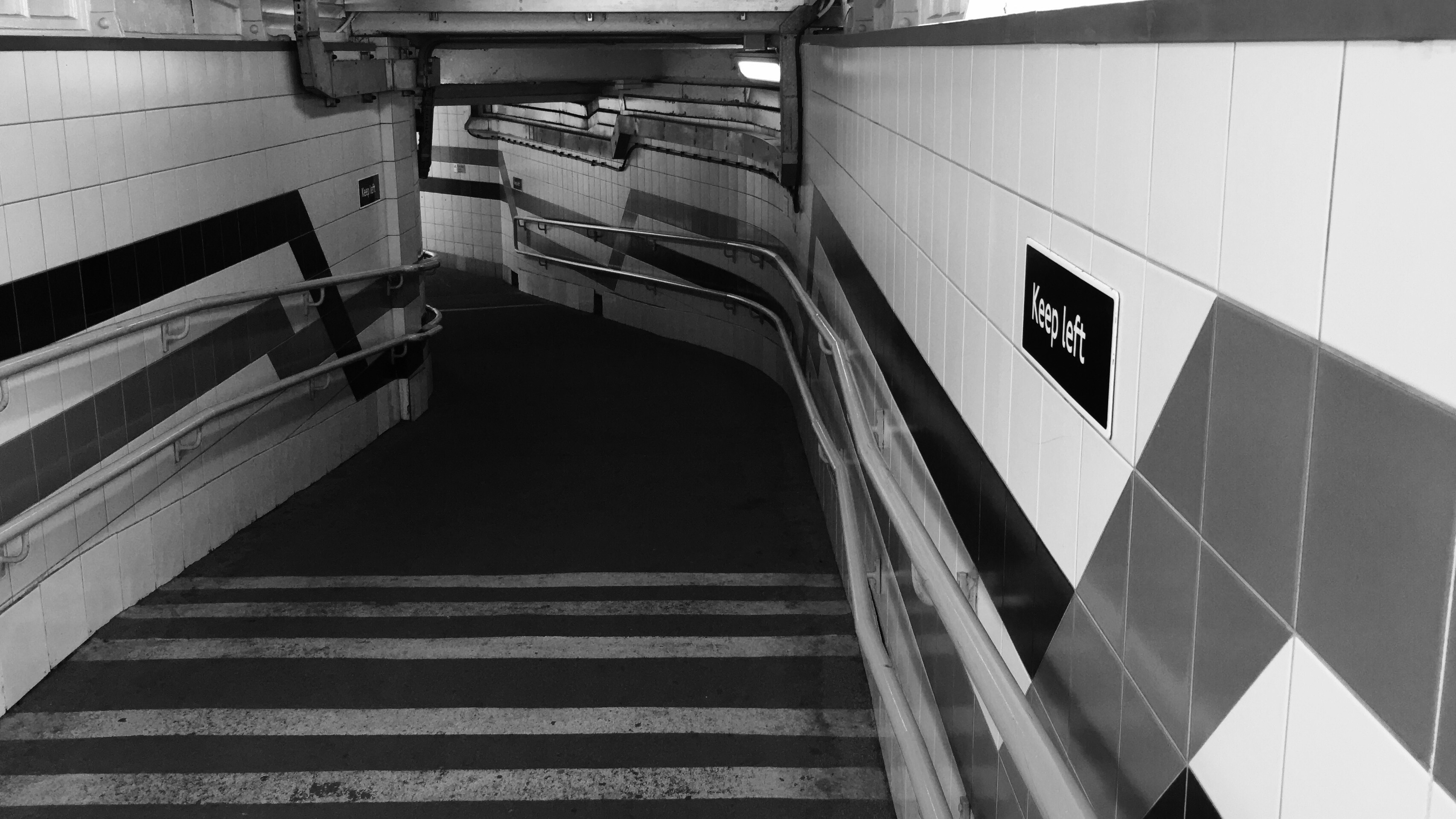
Granted, Stonebridge Park isn’t a particularly interesting station (and without this story I’d be struggling for things to say about it) so perhaps the member of staff who quizzed me on this occasion was perplexed at why I’d want to take pictures there. The trouble was he wasn’t very pleasant about it, chasing us down the stairs, demanding that we told him what we were taking pictures of and then flat out refusing to let us take any at all. Now I tend to freeze up in confrontational situations like this and after being greeted with a blank stare when we explained we were interested in station architecture, the whole experience did make feel like I was being treated like a criminal.

I understand that security needs to be tight, and there certainly are times and places where photography would not be appropriate but perhaps a little more discretion needs to shown by TfL staff to people who are travelling round the network to discover, learn about and share hidden delights. In fairness I have since tried to take a more confident stance and rather than backing off into my shell, try to explain more about my mission and online endeavors with this project. Sadly the last time this happened, at Snaresbrook, the member of staff lost interest almost immediately. Still, at least he left me alone.

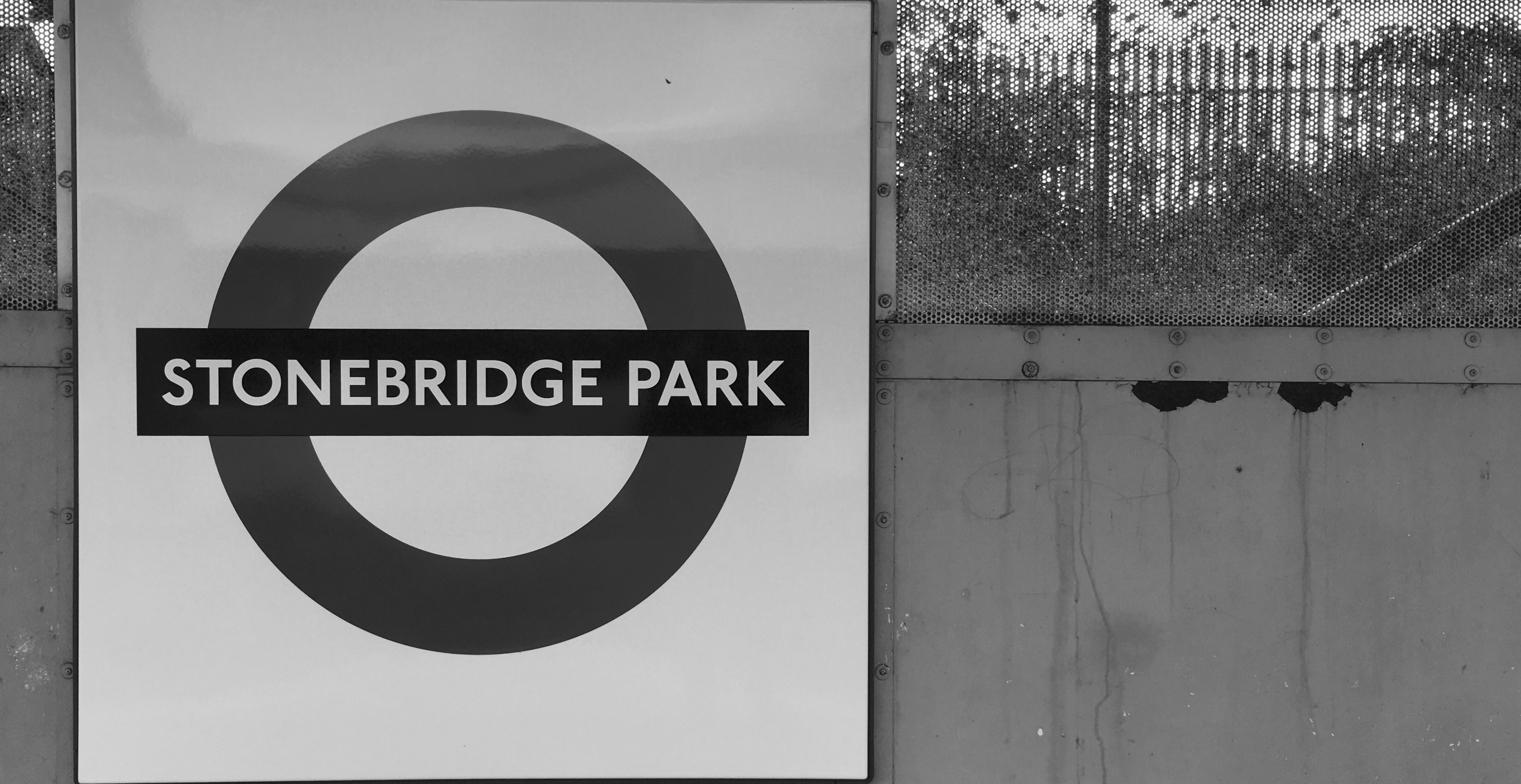
So after all that, here’s the boring picture of Stonebridge Park we weren’t supposed to take.

Image copyright A Carter – CallingAllStations.co.uk

Station Index
079/270: #Harlesden – The Harlequin

For a brief spell in the 1990’s the Watford DC Line was operating under the moniker “The Harlquin Line.” Details as to how this came about have been lost in the mists of time, but a few forums suggest the title was acquired from a public naming competition ran by Network SouthEast.

Some say that Harlequin is a portmanteau of HARLsden and QUEENs Park. Others have suggested that the inclusion of Harlesden is merely a happy coincidence and the name is actually a triple portmanteau of HARrow, WilLESden and QUEENs Park.

At some point, perhaps after privitisation, the Harlequin name seems to have dropped out of use in favour for the less interesting “Watford DC Line.” Either way if you’ve got any information about how this brief but quirky name came about, do drop a comment below…

Image copyright A Carter – CallingAllStations.co.uk

Station Index
078/270: #WillesdenJunction – The Confusing

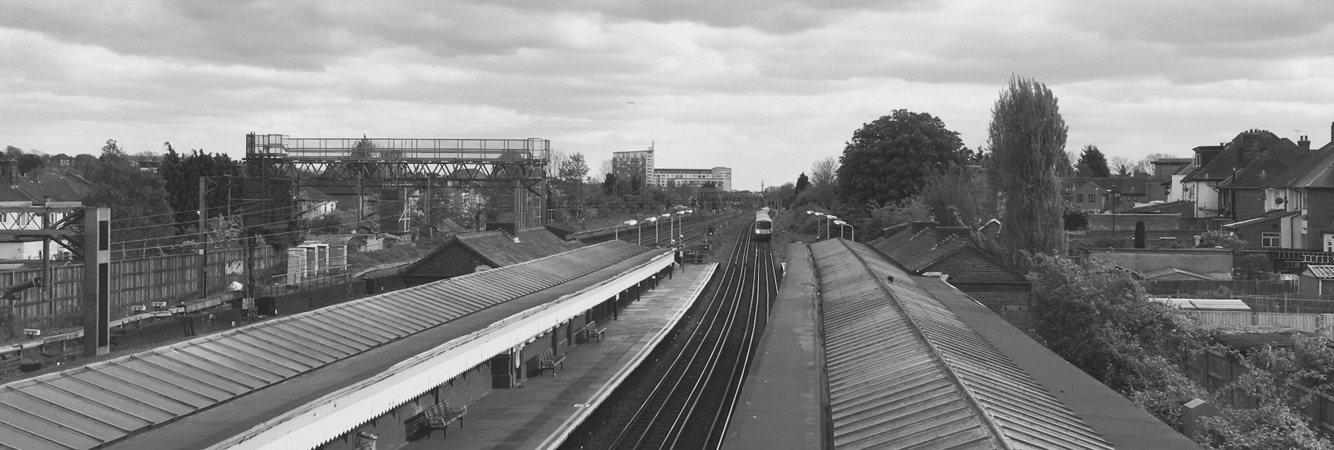
Willesden Junction shouldn’t be that confusing. It has 5 platforms. 2 up top for the Overground, 2 down below for the Bakerloo and Watford DC lines and a 5th lesser used bay that we don’t really need to worry about. The thing is, it’s not Willesden’s platform layout that we found confusing, it’s the connecting passageways and non-descript exits that really will disorient and bemuse you.

I suspect it’s down to the history of Willesden Junction. This used to be 3 technically separate stations (the two we’ve mentioned already plus a now demolished main line station), each built stand alone with their own unique entrances. Sure they’ve been knitted together after, but the entrances have not been sufficiently rationalised. This probably wasn’t too much of a problem until very recently when the advent of the automated ticket barrier meant you couldn’t simply walk back through the station if you got it wrong. Now, exit at the wrong gateline and, due to the nature of the railway landscape, you’re about half a mile away from where you actually wanted to be.

The signage doesn’t help either, especially for new comers not really sure of their surroundings. Victoria and I learnt this the hard way when we both agreed to follow signs for “Buses” blissfully unaware there were in fact “Buses” at both exits…

Image copyright A Carter – CallingAllStations.co.uk

Station Index